
A Proposal for a more stable Peace System Architecture: The Patch to Prevent Future War
Modern science defines Peace Systems as clusters of neighboring societies—ranging from tribal groups to modern nations—that successfully shun war through shared identity and non-warring values. However, a critical glitch remains: Individual Belief and Ideology. While traditional peace systems often work from the top down, they remain vulnerable to systemic collapse. The Peace Protocol offers a hybrid approach: a top-down structural separation founded on sovereign, audited individuals.
1. The Top-Down Architecture: The Swiss & 1579 Models
Historically, peace systems are established by leaders who codify rules of non-aggression.
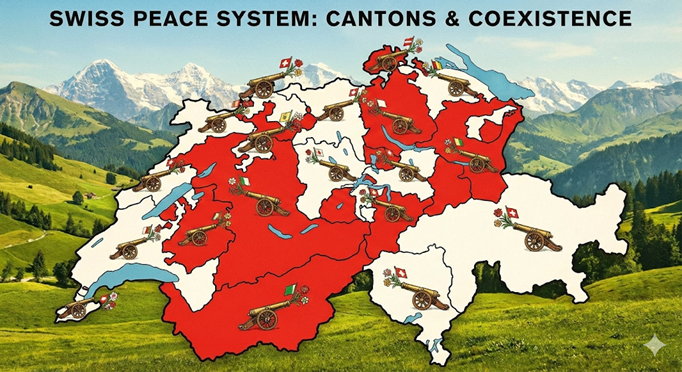
The Swiss Federal Model: Switzerland’s stability is built on Decentralization. By empowering 26 sovereign cantons to manage their own linguistic and religious affairs, the system prevents the concentration of power that typically fuels conflict.
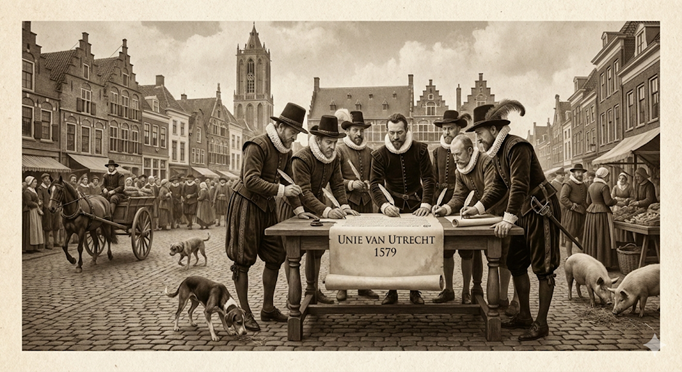
The 1579 "Article 13" Patch: In the Union of Utrecht, a technical patch was introduced. Article 13 decoupled state power from individual belief. It didn't ask people to agree; it mandated that sovereignty exist alongside diversity, ensuring no one could be persecuted for their conscience.
2. The Vulnerability: The "Sociopath Leader" Glitch
A peace system is only as strong as its participants' adherence to the treaty. When a leader—often exhibiting sociopathic traits—reshapes the world according to a personal ideology, they exploit the "Bird Brain" of the collective. Once in power, they stop abiding by the systemic rules, sometimes to favor a specific group, effectively bending the Peace System until it breaks.
3. The Bottom-Up Solution: The 7 Step Peace Protocol
To prevent the sociopath from doing his causal necessities, the Peace System architecture must also be built from the bottom up. Global peace fails because the individual human mind identifies its thoughts as "Self", starts seeking safety in the herd, where it falls prey to leaders with personal agenda's.
To become a non-warring unit, the individual must engage in a systematic de-programming:
Awareness of Conditioning: Become conscious of the conditioned mind and the Voice Inside by studying the
the free Step 2 of the Peace ProtocolDecoupling Identity: If your belief is "You," a disagreement is a threat to your survival. By decoupling identity from the "automated voice" (the Bird Brain), you move from reactive defense to independent Authority.
The Sovereign Audit: You must prove to yourself that you are no longer a "warring unit." This is achieved through the rigorous
Step 6: The Architect’s Choice — The 1579 Protocol.
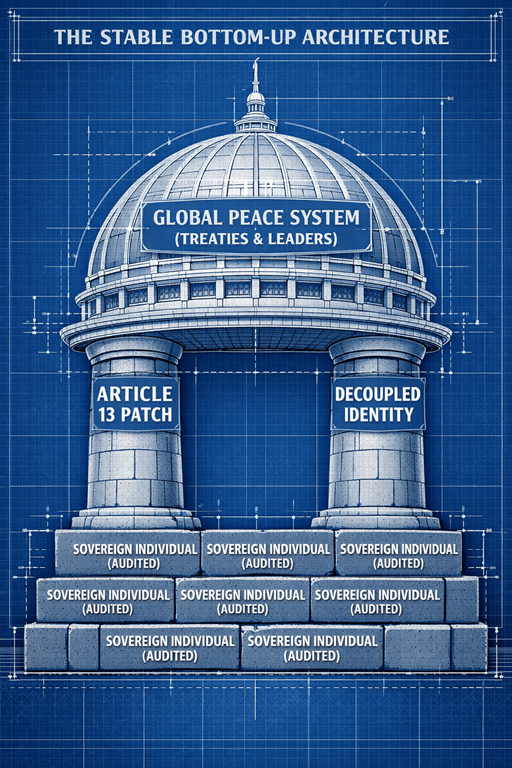
The genius of the bottom-up solution is that as the Peace Protocol is applied, a multitude of individual problems simply dissolve.
Decoupling the Ego: All personal problems—fear, depression, anxiety—are tethered to the persona or "ego." When you perform the Sovereign Audit, you decouple your identity from the automated voice in your head. You no longer fight to be sovereign, and you accept the sociopath in your mind. He is already there anyway, if you fight him, the next one in line is already growing. By passing the Sovereign audit you become the sovereign individual. Now do you belief that the sovereign, independent individual does exist or is he merely a conscious interdependent individual ?
The Silence of the Bird Brain: As you realize that thought is a tool, not a "Self," the mental chattering stops. Questions like "What is fear?" or "What is death?" find their answer not in a definition, but in the cessation of the conflict itself.
Stability, A Non-Warring Unit: By ending the internal war, you become a stable node in the human peace system. You are no longer "available" for a leader to recruit into an ideological battle.
"A Peace System where the individuals are still unconsciously programmed for war is merely a paused conflict. True peace requires the individual to accept the sociopath in their minds."